01|Identify the direction of hair growth
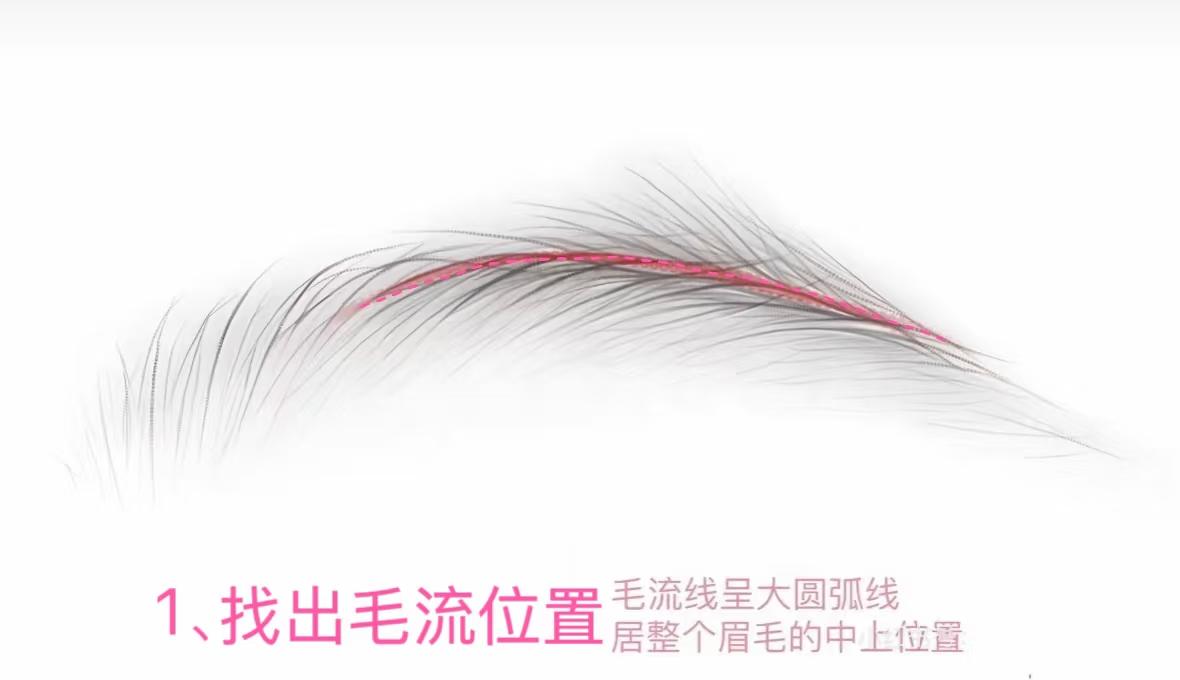
Before arranging the strokes, identify the direction of hair growth across the whole brow.
Observe how the existing brow hairs grow. A broad curved line can serve as a guide to their overall direction. In this illustration, the line runs through the upper-middle part of the brow body and gradually extends towards the tail.
It is not the outer contour of the brow. It is an important reference for arranging the main strokes that follow.
Establishing the overall direction first helps prevent later strokes from going their separate ways and making the shape look disjointed.
02|Gradually angle the lower main strokes back
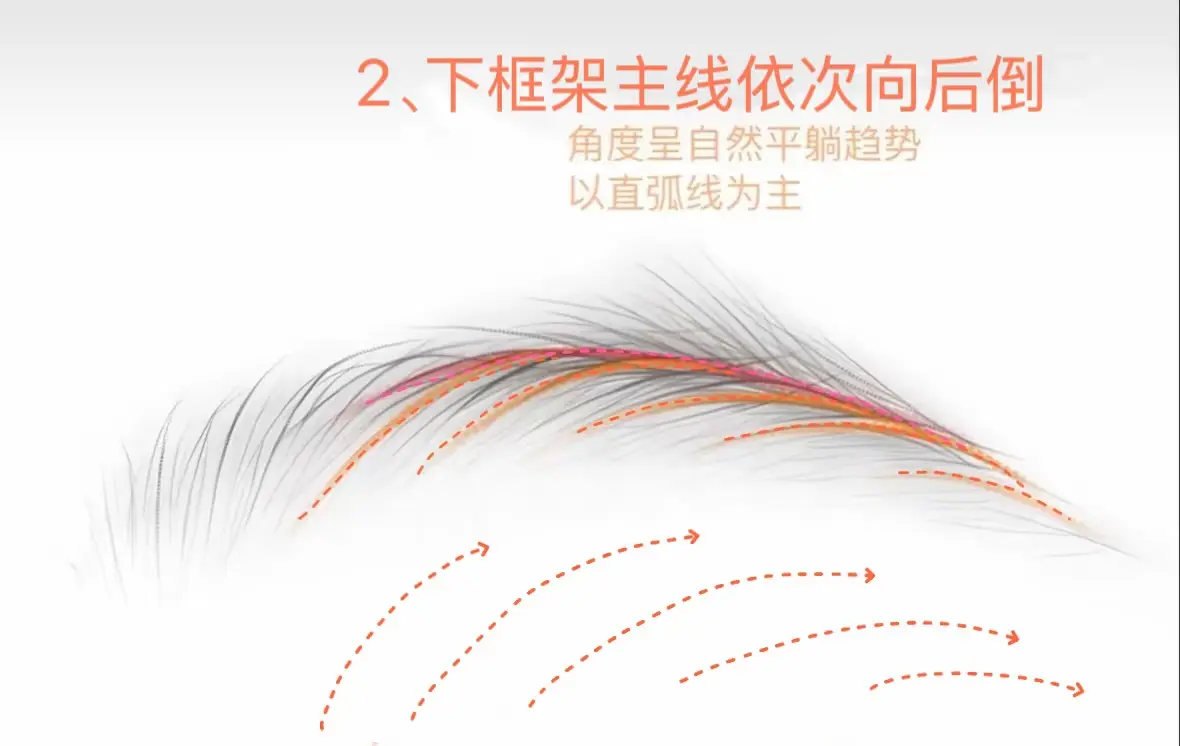
The main strokes of the lower framework should gradually angle back, following the brow’s overall growth direction.
The orange lines show the lower main strokes, drawn mainly as gently curved strokes with a relatively straight course. As they extend from the brow body towards the tail, their angles become flatter and gradually converge towards the back.
The aim is not to draw a particularly straight lower edge, but to let the directions of neighbouring strokes change naturally.
The lower edge should not sit too low or appear too rigid, as this can visually weigh down the relationship between the brows and eyes.
03|Use the arch to guide the upper main strokes
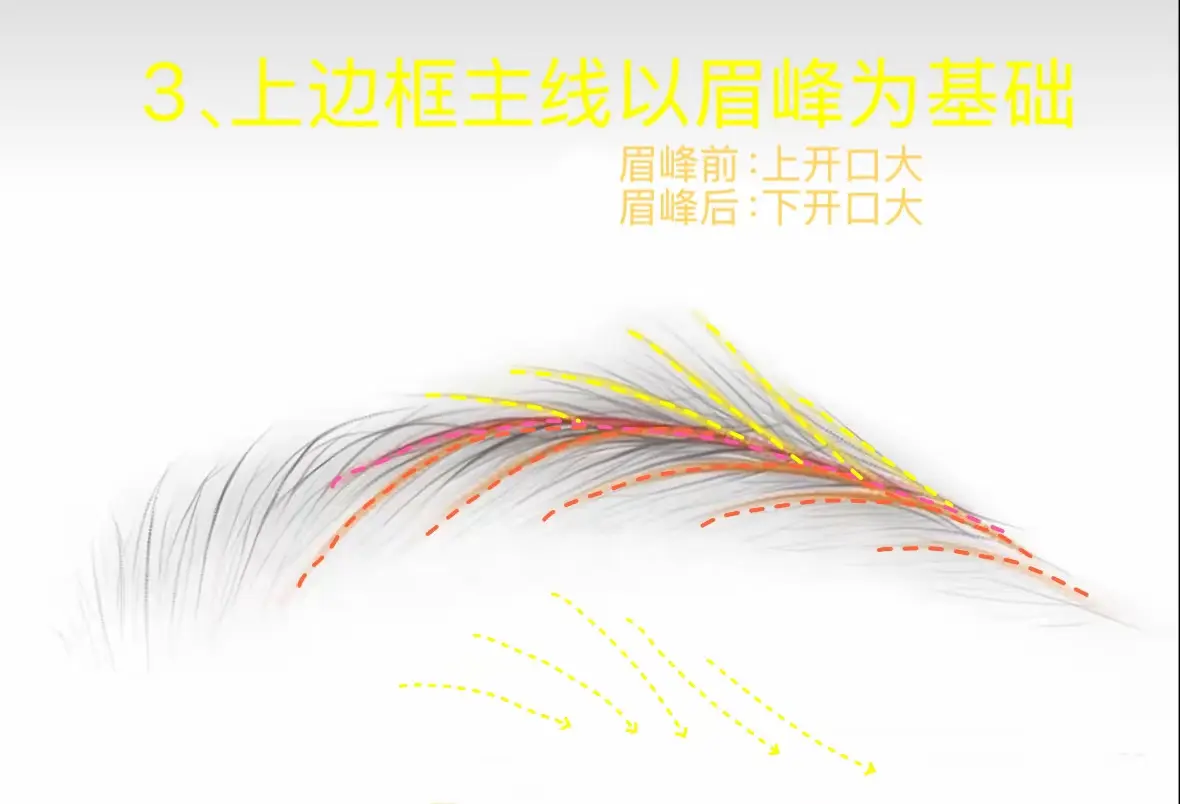
The direction of the upper main strokes needs to relate to the position of the arch and the overall curve of the brow.
The yellow lines show the upper main strokes. The illustration marks a wider opening above before the arch and a wider opening below after the arch. This change in the direction of the openings guides the strokes towards the tail.
The aim is to give the brow clear structure without abrupt, rigid changes of direction.
The actual position and curvature of the arch must still be chosen in relation to the individual’s bone structure, the relationship between brows and eyes, and aesthetic preferences. One fixed template cannot suit everyone.
04|Open the brow-start strokes out in a fan
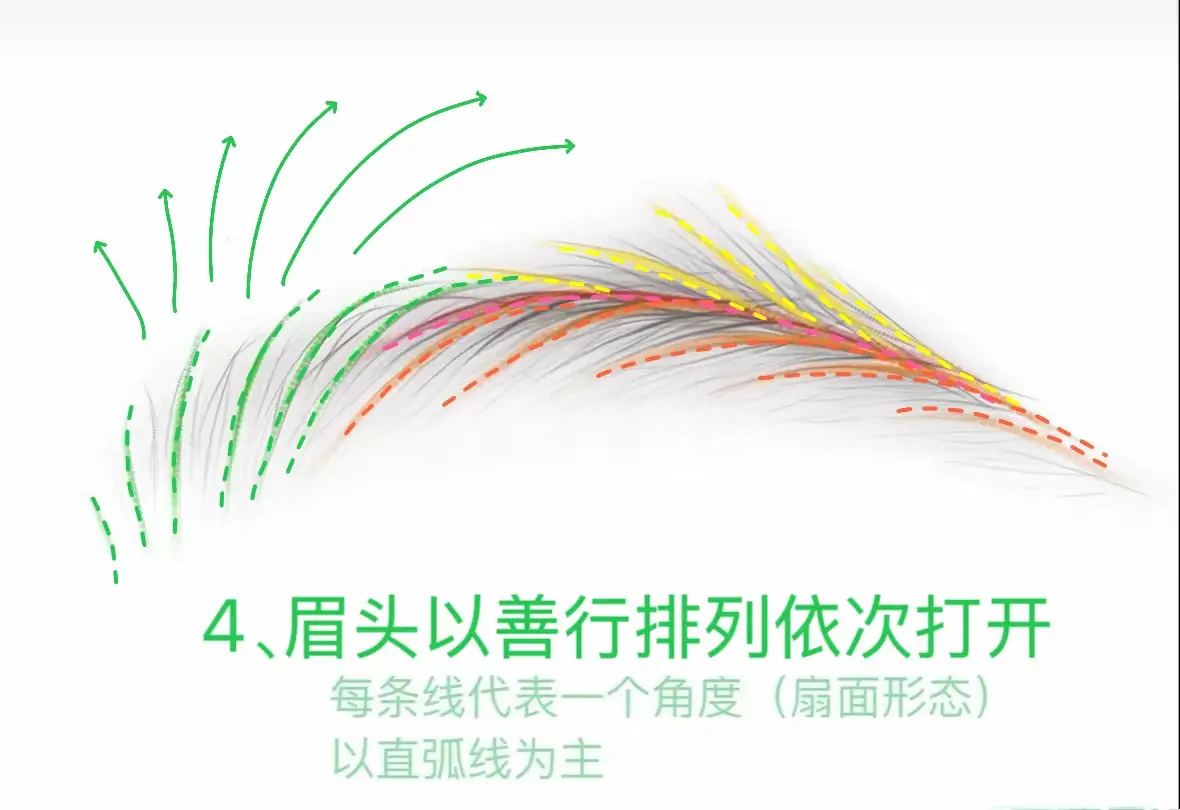
The green strokes open out from the brow start, each at a different angle, forming a fan. They are mainly gently curved strokes with a relatively straight course.
Natural hairs at the brow start do not all grow neatly at the same angle. Follow the existing hair flow when arranging the strokes, allowing them to open out like a fan.
Each stroke has its own direction and spacing, with appropriate variation in density between the lines.
Avoid gathering all the strokes into one bundle or making them overly regular, as this can lose the light, natural character of the original brow hairs.
05|Check the connections between the main strokes and the flow of hair
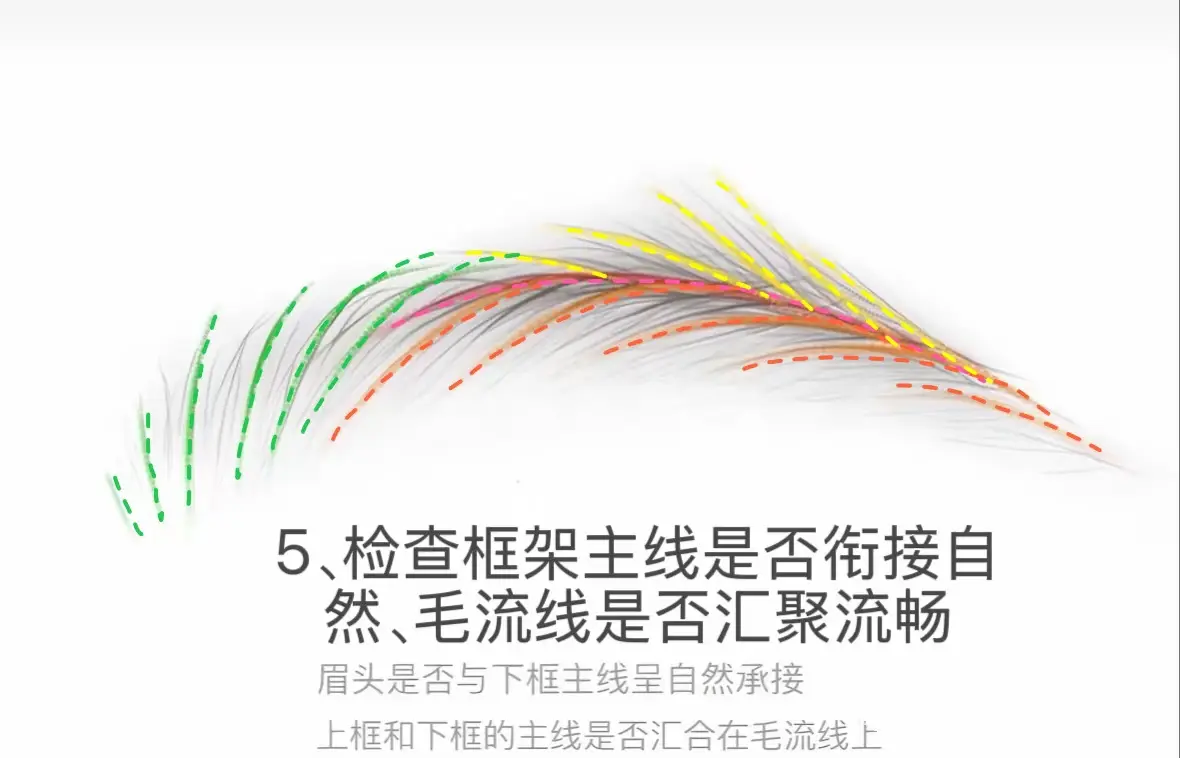
After arranging the main strokes of the upper and lower frameworks, review how the whole brow connects.
The illustration highlights two checks: whether the brow-start strokes connect naturally to the lower main strokes, and whether the upper and lower main strokes meet along the hair-flow guide.
Pay particular attention to the middle of the brow body. The upper and lower strokes should not break off abruptly or clash in direction.
Having structure does not mean every stroke must be neatly aligned.
What matters is how the strokes relate to one another, making the whole brow look continuous and natural.
06|Supporting strokes in the lower framework
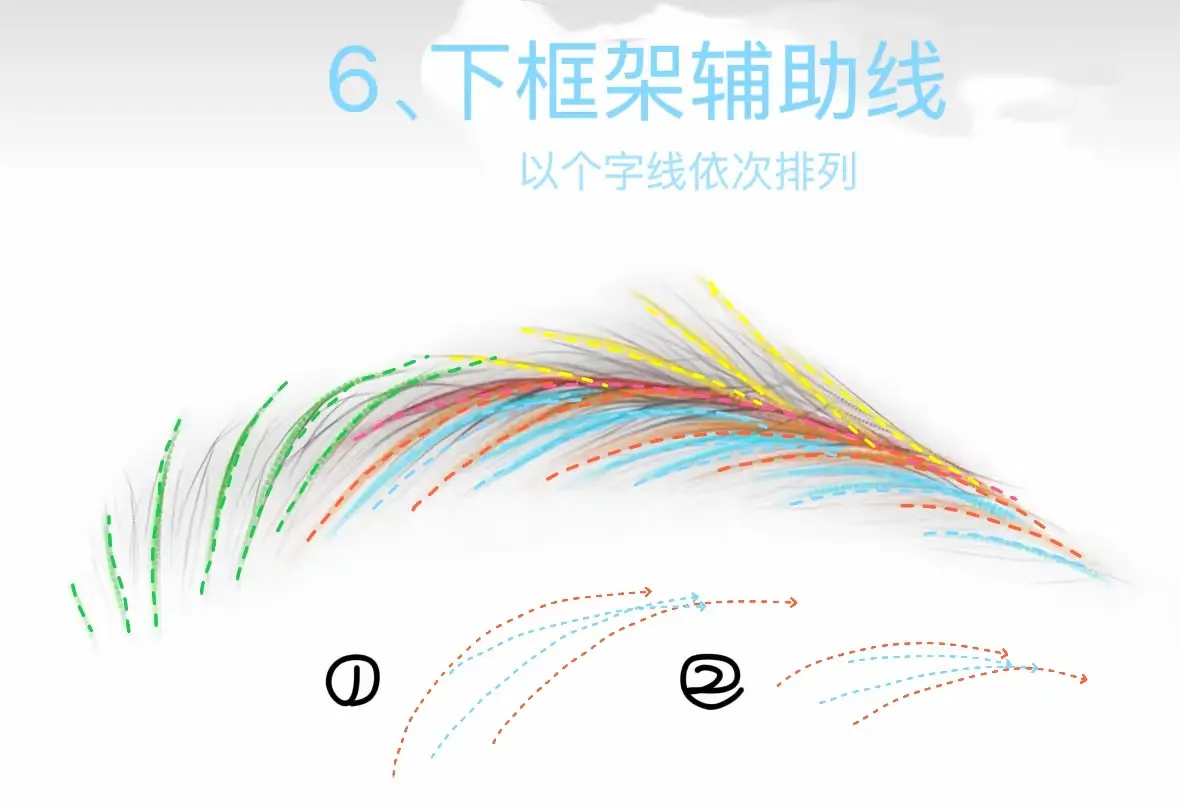
The light-blue lines are supporting strokes in the lower framework. They are arranged in the branching pattern labelled “个” in the illustration, adding strokes within the spaces between the main lines.
Supporting strokes add detail and density between the main strokes. Their purpose is not to fill every gap.
Consider each added stroke’s length, angle and relationship to the existing hair flow, allowing local density to change gradually.
Keeping both sparse and denser areas within the brow helps express more natural layers of hair growth.
07|Supporting strokes in the upper framework
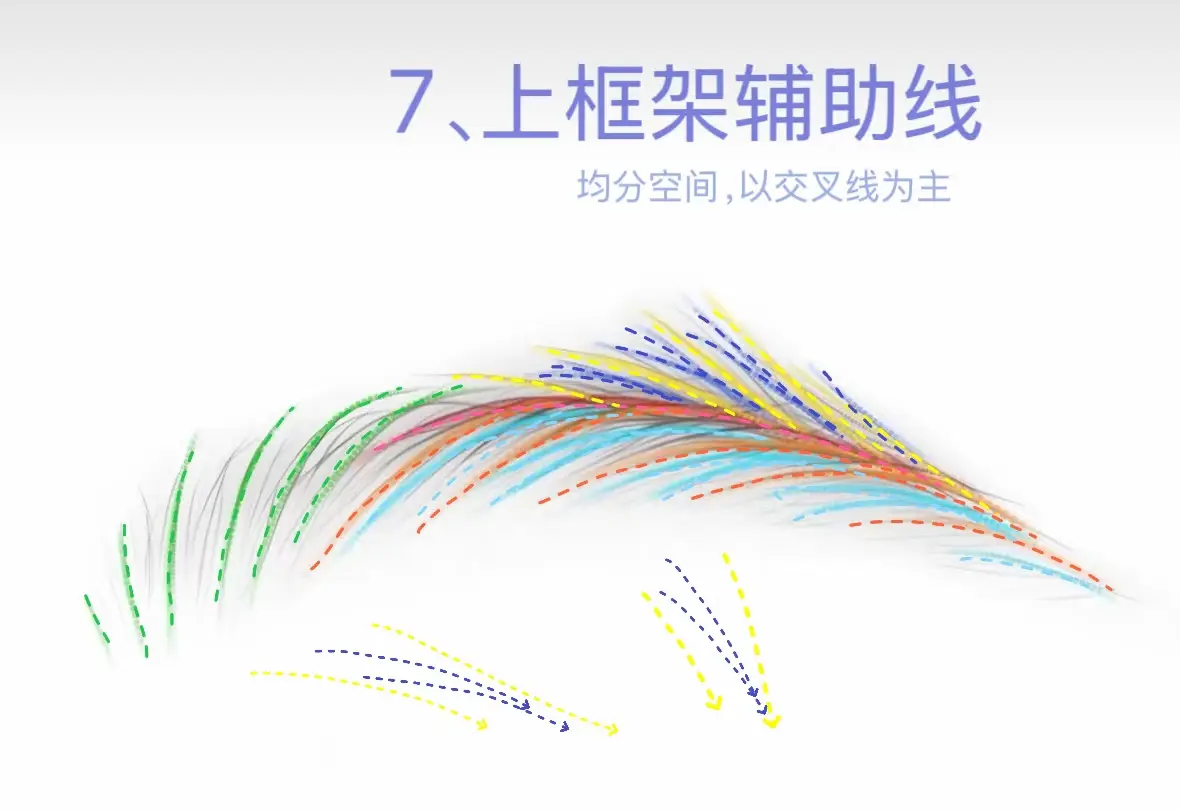
Supporting strokes in the upper framework must also follow the existing hair direction.
The purple supporting strokes divide the spaces between the main strokes evenly, mainly using crossing lines. They still follow the stroke directions around the body and arch, connecting the upper framework to the main structure.
Do not insert strokes across the hair flow merely to fill gaps, or disrupt the direction already established by the main strokes.
Main strokes establish structure; supporting strokes add detail and connections. Together, they help the brow retain both definition and softness.
08|Supporting strokes at the brow start
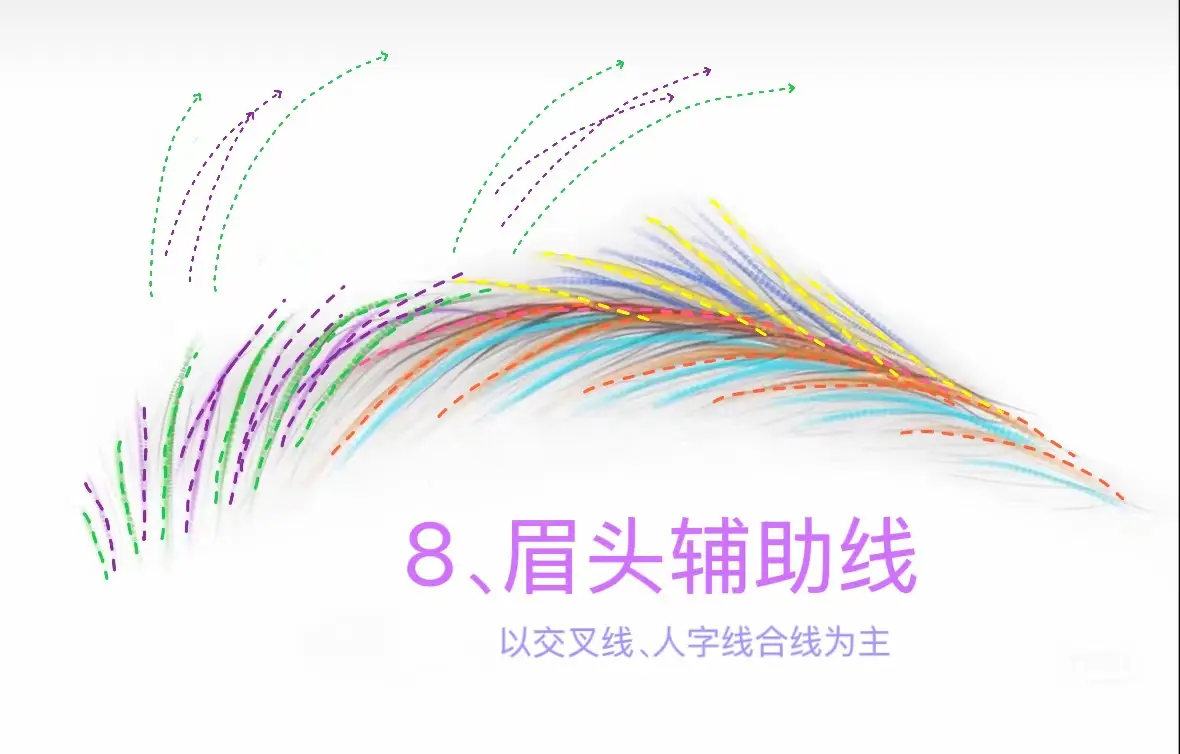
The illustration uses crossing strokes and strokes that meet in a “人”-shaped pattern at the brow start.
Purple supporting strokes sit between the green main strokes, following their fan-shaped arrangement and adding connections and layers within the brow start.
Supporting strokes enrich the spaces and density between the main strokes; their purpose is not to fill every gap.
09|Add fine strokes to the remaining spaces
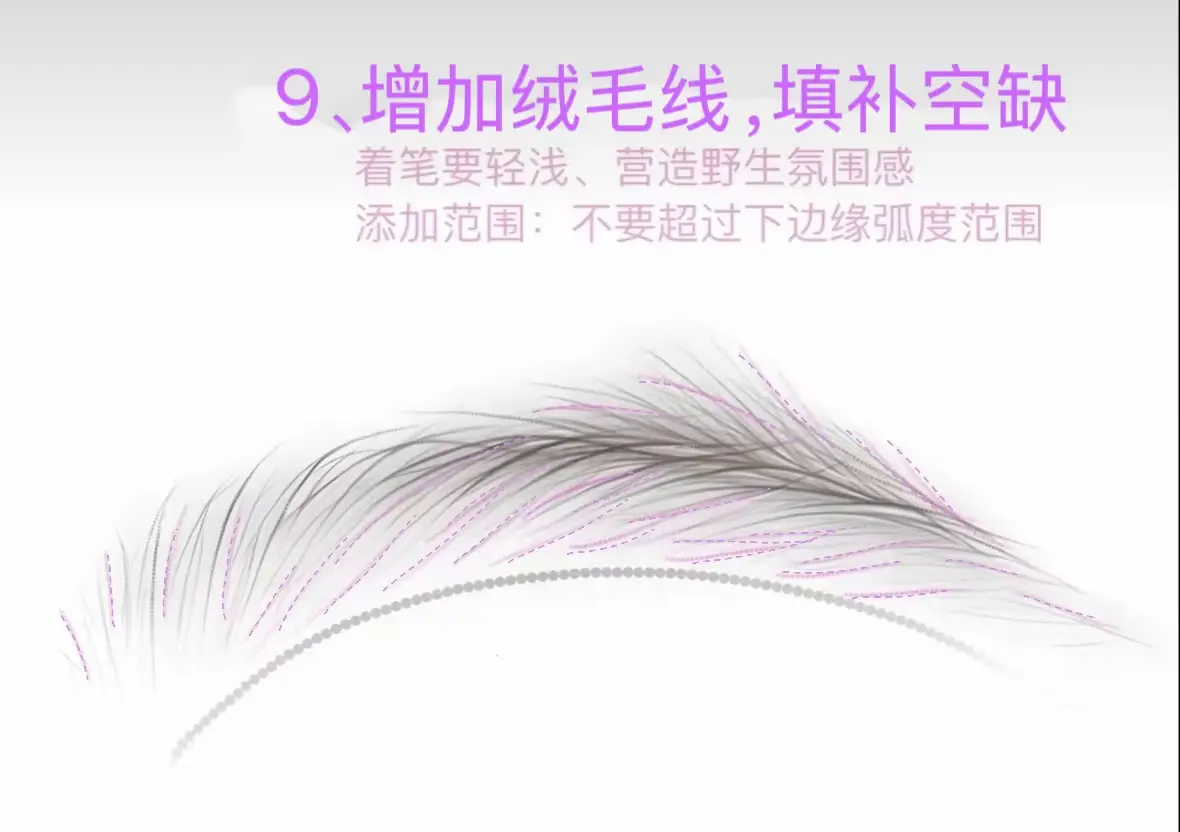
The final step is to enrich the layers within the brow with more delicate, fine strokes.
These strokes are usually lighter, shorter and paler. Their main role is to suggest subtle variations in hair between the main and supporting strokes.
The illustration calls for light, delicate marks and keeps the additions within the curve of the lower edge. Create natural transitions in tone, density and definition while retaining the overall contour.
Fine strokes are not there to make the brow denser. They add lightness and detail between the structural lines.
When main, supporting and fine strokes connect naturally, the brow can present a clear framework, structure and layers while retaining the visual character of natural hair flow.
Brow design ultimately needs to consider the whole face
The nine illustrations above show one approach to arranging hair-stroke brow lines on paper.
An actual brow design, however, cannot be decided from a brow diagram alone.
Lele considers the depth, visual weight and overall character of the facial features, the height of the cheekbones and brow bone, and the direction of the existing brow hairs.
Working with the existing bone structure, she uses the brow contour to refine facial proportions visually. With a suitable technique, main strokes establish structure and fine strokes enrich the layers, bringing the brows into greater harmony with the other features.
Lele favours soft, natural brows that retain the character of the original hair, but clients are not limited to one style.
Assess the bone structure, then define the contour; establish the structure, then develop the layers.
This is why the framework and the strokes need to work together in hair-stroke brow design.
Note: These images illustrate brow design and stroke arrangement on paper. They are not client procedure examples or instructions for performing cosmetic pigmentation yourself. Actual design and technique choices must be assessed in relation to the individual’s starting point.